

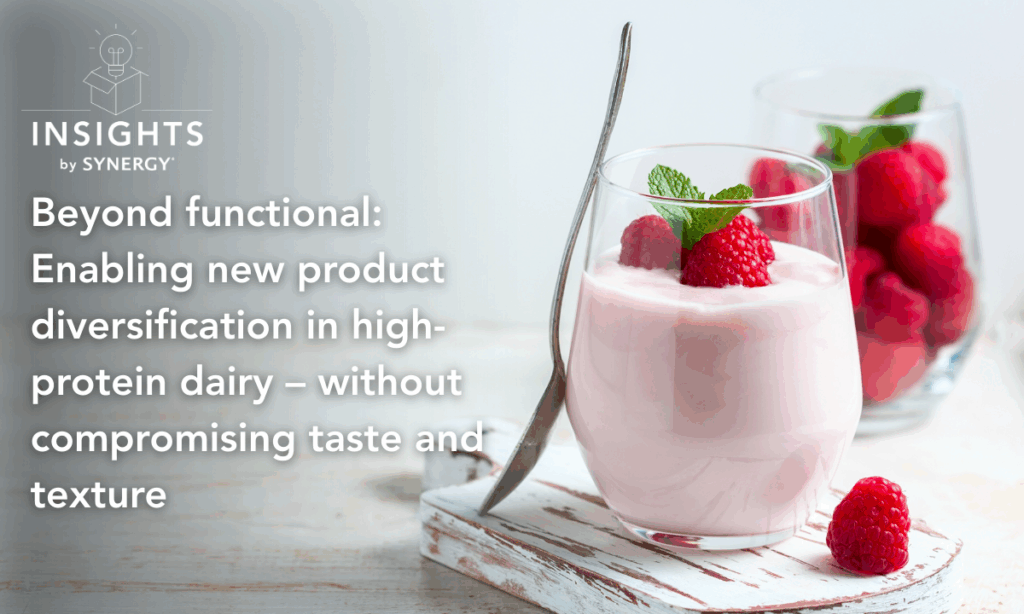
Beyond functional: Enabling new product diversification in high-protein dairy – without compromising taste and texture
Functional dairy – a fast-growing market
Consumers are adopting a more proactive approach to nutrition and healthy living, paying close attention to the health impact of the food they consume. Because dairy is naturally high in protein, the pairing of protein fortification with dairy products has experienced rapid growth in recent years.
Diets that focus primarily on protein are becoming increasingly popular for their associated benefits such as muscle and tissue repair, improved satiety compared to other macronutrients, and possible reductions in blood pressure and cholesterol. Protein is also often credited with broader health and wellbeing benefits, namely boosted energy and immunity.
The global milk protein market size was estimated at USD 13,676.9 million in 2024 and is projected to reach USD 19,662.4 million by 2030, at a CAGR of 6.3% from 2025 to 2030. The market growth can be attributed to the rising consumer awareness of health and wellness that is fuelling demand for protein-rich products.
Globally, 11% more dairy products year-over-year are featuring claims of high-protein, reflecting consumer desire to maximise protein intake. Motivations for choosing high-protein foods may differ across age groups – younger people may boost the protein content of their diet to support fitness goals, whereas older age groups may increase their protein intake in order to maintain good health as they age.
Despite the ‘health halo’ that surrounds protein and protein-enriched foods, they often face taste challenges, and protein fortified dairy foods are no exception.
Understanding taste challenges in high-protein dairy
To support food and beverage manufacturers in understanding flavour preferences for functional innovations, research by Synergy Flavours showed that 75% of consumers surveyed found taste challenges with high-protein yoghurts on the market. Overwhelmingly, respondents complained of flavour and texture challenges, with a lack of flavour delivery and “chalky” texture frequently cited as pain points. 40% of respondents identified taste challenges directly linked with astringency and felt that high-protein dairy yoghurt had a dry, chalky mouthfeel.
Most taste challenges found in the survey can be correlated with astringency, a chalky taste characterised by a dry mouthfeel. This consensus underscores the need for astringency masking solutions to balance the taste profile of high-protein dairy, where product quality is the principal driver when determining which brands consumers will buy and which they won’t.
A flavour solution informed by science
Given the strong opportunities to innovate in the protein fortified market, manufacturers are experimenting with new technology-based approaches to flavour development. Rooted in the principles of food chemistry, the science of taste modulation is creating opportunities to expand protein fortification into new product categories. The challenge lies in improving the taste and texture without increasing sugar or fat content, particularly given changing UK guidelines on high in fat, salt or sugar (HFSS) foods.
Taste modulation presents a solution. The process of modifying the perception of taste, aroma and textural properties in food, taste modulation is used to enhance desirable – or suppress undesirable – qualities through adding specifically designed ingredients to modulate the perception of sweetness, reduce bitterness and enhance mouthfeel, for example.
Developed through analytical techniques that identify primary aroma and flavour compounds at molecular level and isolate those that present a particular taste challenge, masking solutions can be used firstly to create a neutral base, then to optimise flavour pairing based on the specific compounds identified. For example, in a high protein vanilla yoghurt, a masking solution can reduce the perception of astringency and chalkiness, improve flavour and confer a creamy mouthfeel. A blind paired comparison of a high-protein vanilla yoghurt control vs the high-protein vanilla yoghurt with an astringency masking solution developed by Synergy showed the success of the approach: 87% of the panel characterised the yoghurt with the Synergy solution as creamier in both mouthfeel and flavour, and 70% noted improved acidity levels and reduced astringency.
With taste a primary purchase driver, this approach allows manufacturers to meet consumer health demands without compromising on the overall taste experience.
Synergy’s solution for the future of functional dairy
It is clear that taste modulation is a critical part of product design, particularly when adding new functionality to classic staples. As the high-protein dairy market continues to grow, taste experience is key to consumer success. Synergy’s astringency masking solution presents a scientifically informed answer to the chalky and astringency issues commonly faced by manufacturers.
Contact us to learn more about our taste modulation solutions
insights