

How to solve the taste and texture challenges of protein fortification in functional foods and beverages

Protein fortification is set to dominate the fortified food and beverage landscape of 2026. Manufacturers are continuing to extend the opportunity for protein-enriched foods and drinks beyond its role as a performance nutrition necessity to a preferred lifestyle choice.
Protein, once restricted to its role as a post‑workout recovery boost, is fast becoming a mainstream wellness staple as brands reimagine protein‑fortified products as the go‑to for a broad range of health‑conscious consumers.
With Innova reporting “Powerhouse Protein” its number one trend for 2026,[i] as nearly 60 percent of global consumers seek to ramp up their protein intake for holistic health benefits, muscle support, and GLP-1 weight-loss medication balance, manufacturers need to find ways to incorporate higher levels of protein into their products while optimising taste and texture.
Protein-enriched plus great taste and texture
Fortifying foods and drinks with protein used to result in a chalky, thick, unpalatable product that struggled to balance protein content with a consumer-friendly experience. Fast forward to today, and flavour partners like Synergy deploy scientific solutions to create new ways of incorporating protein in a finished product while retaining a desirable sensory profile.
High-protein dairy products, for example, such as yoghurts can present undesirable taste challenges, including an astringent taste that causes acidic off-notes. At Synergy, we take a high tech approach to taste modulation utilising sensory & analytical techniques. Analysing products at molecular level enables identification and quantification of primary aroma and taste compounds in high-protein applications to pinpoint those compounds that present a particular flavour challenge.
Sensory methodologies and insights from analytical data are used to develop taste modulators for these compounds within specific food matrices. These modulators, developed by flavour chemists, mask challenging flavours and aromas and enhance desirable flavour and textural attributes to create the desired end product.
The Paired to Perfection portfolio leverages our taste modulation technology to pinpoint and mask off-notes while enhancing desirable flavour compounds, pairing complementary flavours to match consumer trends.
Protein support for women’s health and healthy aging
Protein is essential for muscle growth and athletic performance, and consumers are increasingly recognising the importance of protein intake for broad health benefits.
Women’s speciality supplements are one of the fastest growing areas in the category, with 4 in 5 women saying they regularly use nutritional supplements and 1 in 4 report increasing their supplement intake[ii]. Today, the market is seeing rapid growth, predicted at 6.5% CAGR between 2026 and 2030.[iii]
Food and beverages designed to support healthy ageing are currently underrepresented in the functional space. According to the World Health Organisation, the population aged 60 and over will double from 2020 to 2050, and the number of people aged 80 and over will triple in this same period.[iv]
As women’s health requires a personalised approach particularly in an ageing demographic, it is essential for manufacturers to innovate with new, highly targeted products. Protein is essential in helping support muscle mass and boost metabolism. Innovation with specialised nutrition products that offer high protein, essential vitamins and minerals, and speciality ingredient blends will be key in appealing to defined consumer groups.
Protein fortification for GLP-1 users
Global demand for GLP-1s is surging, with analysts projecting the GLP‑1 market to reach $160 billion by 2030.[v] This rapid adoption is driven by their effectiveness: GLP‑1 medications suppress appetite by slowing digestion and enhancing fullness signals, so patients naturally eat less.
Consumers on GLP-1 therapy are starting to shun ‘empty calorie’ categories such as sugary drinks, confectionery, and sweet treats and show clear preferences for convenient, palatable, and varied protein sources, consistently identifying protein as one of the hardest nutrients to obtain from their diet, second only to vitamins. Research presented in a new global report by Carbery[vi] shows that 55% of respondents supplement with protein, of whom 70% opt for high-protein snacks such as bars and cookies, 65% take ready-to-drink shakes, and 55% consume protein-fortified yoghurt or dairy.
This highlights a strong trend toward higher daily protein goals, with nearly two-thirds of users aiming to take at least 100g of protein per day. Lighter protein drinks such as clear shakes are preferred by 70% of users over heavier, creamy shakes (30%), reflecting a desire for easy-to-consume, less filling options.
Preferred protein formats
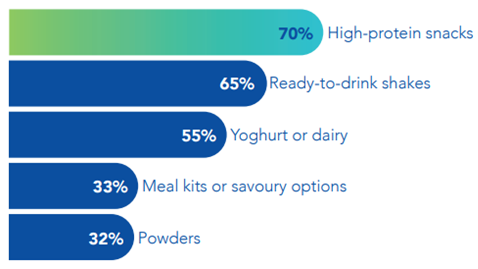
Figure 1: Protein categories preferred by GLP-1 users[vii]
In response, food manufacturers have started to reformulate products to incorporate higher protein levels, to gain greater satiety from fewer calories. With consumers increasingly unwilling to sacrifice taste for functionality, taste challenges need to be addressed from the outset.
Reformulating flavour for the GLP-1 market
A further challenge for GLP-1 users is the change in their perception of taste, with almost half (46%) of the individuals taking the medication reporting reduced enjoyment of sweet foods and increased sensitivity to bitterness. Clear proteins such as whey protein isolates, with a light taste profile are proving popular, although products in this space rely on added sweeteners to mask astringent or acidic off-notes, which underlines the value in exploring masking technology and taste modulation solutions to make products more palatable.
Food and beverage manufacturers are increasingly turning to their flavour providers for new product development and reformulation support in managing the new taste challenges that are emerging in a market dominated by protein-fortification.
To discuss your protein fortification or product flavour needs with our expert team, visit stand 3K246 at Vitafoods 2026
Read more about our taste modulation solutions.
[i] Innova Market Insights, Global Food Trends: Insights from January 2026, 2 February 2026. https://www.innovamarketinsights.com/trends/global-food-trends-insights-from-january-2026/. Accessed via Food Ingredients First: https://www.foodingredientsfirst.com/news/innova-2026-fb-trends.html
[ii] Innova – Innovation Around the Globe: Supplements for Stress & Women’s Health (2025)
[iii] ‘Womens Health & Beauty Supplements Market – Global Forecast 2026-2030’ Research and Markets, https://www.researchandmarkets.com/report/womens-health-supplement. Accessed 16 April 2026.
[iv] Ageing and Health, World Health Organisation, https://www.who.int/news-room/fact-sheets/detail/ageing-and-health. Accessed 16 April 2026.
[v] Carbery: The Future of GLP-1 Report, Horizon 10, 2026. Accessed March 2026. https://www.carbery.com/wp-content/uploads/2025/11/The-Future-of-GLP-1-Full-Report.pdf
[vi] Carbery: The Future of GLP-1 Report, Horizon 10, 2026. Accessed March 2026. https://www.carbery.com/wp-content/uploads/2025/11/The-Future-of-GLP-1-Full-Report.pdf
[vii] Carbery: The Future of GLP-1 Report, Horizon 10, 2026. Accessed March 2026. https://www.carbery.com/wp-content/uploads/2025/11/The-Future-of-GLP-1-Full-Report.pdf
insights